Céu Executivo Notícias
North advances 53% internationally and repositions Belém and Manaus in connection with abroad
The 53.3% jump in international passengers in February reinforces the North as the most relevant gateway for external flows, tourism and economic integration.
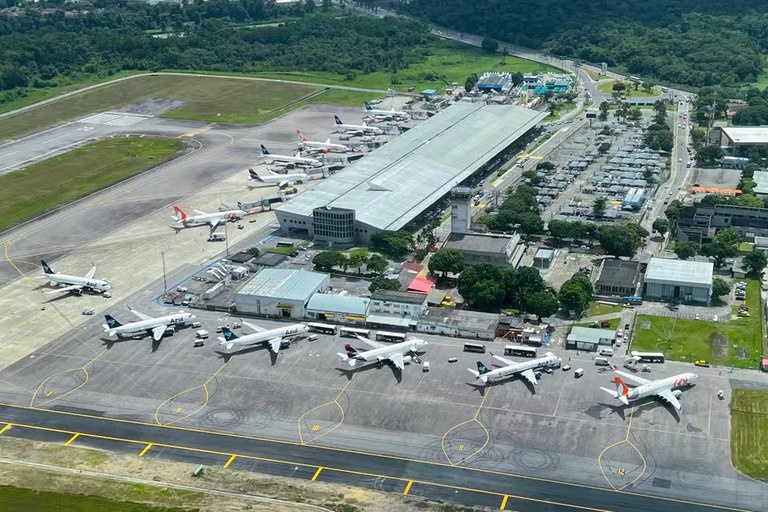
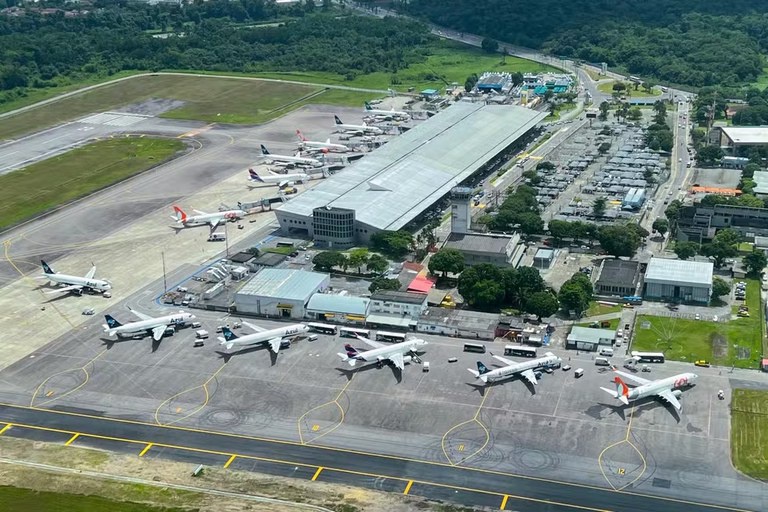
The Northern Region recorded 53.3% growth in international movement in February 2026, according to data released by the Ministry of Ports and Airports on April 10. There were 34,336 passengers on flights coming or going abroad, compared to 22,403 in the same month of 2025. In a sector accustomed to looking first at the Southeast and Northeast when the topic is connectivity, this advance by the North changes the conversation because it reveals a less obvious and, therefore, more strategic growth frontier.
In total, the region's airports handled 839,888 passengers in the month, including domestic and international routes, an increase of 2.4% year on year. Domestic traffic was practically stable, with 805,552 passengers. This makes the international data even more interesting: the new growth vector did not simply come from total volume, but from the intensification of external connections.
Belém and Manaus return to the center of the map
Belém led the region's movement, with 287,342 passengers, equivalent to 34.2% of the regional total. Manaus came close behind, with 251,484 passengers and growth of 10.6% over the same period last year. Santarém, Macapá and Palmas also advanced, albeit on different scales. The message is clear: the region does not depend on a single airport to sustain connectivity, and this improves the resilience of the network.
There was also a 22.6% increase in the arrival of foreign visitors who actually reside outside Brazil, according to an Embratur panel based on Federal Police entry records. This detail matters because it qualifies the reading of the number. We are not just talking about passengers in statistical transit, but about international flow with real potential for economic, tourist and business impact.
What does this change in market reading
When the North grows internationally, the consequence is not restricted to airlines. This changes the logic of infrastructure, airport services, hotels, events, logistics and corporate travel design. Regions previously treated as peripheral areas of the network begin to gain a more relevant role in connecting with external markets and in the circulation of executives, suppliers and investors.
For those who operate business aviation, this advance also matters. In environments where the international network improves, the quality of the airport ecosystem, the availability of services and the predictability of operations tend to increase. It does not mean the absence of bottlenecks, but it indicates a less isolated market with more density of support.
More than regional statistics
In 2026, the North begins to appear less as a geographic exception and more as a practical axis of connectivity. This helps explain why Belém and Manaus remain on the investment radar and why intermediate airports in the region deserve closer monitoring. International growth, when consistent, usually anticipates greater repositioning of infrastructure and economic interest.
In other words, it's not just the North that's moving. It is the Brazilian aviation map that is being redesigned with more intensity outside the traditional hubs.