Céu Executivo Notícias
South Region exceeds 7.8 million passengers and reconfigures the corporate connectivity map
With 7.8 million domestic travelers in February, an increase in air cargo and new investments in regional terminals, the South gains strategic weight for executive agendas and high-value operations.
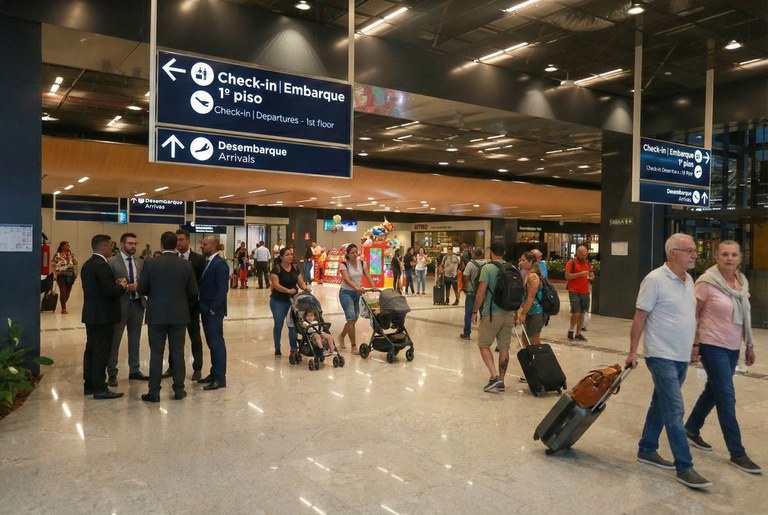
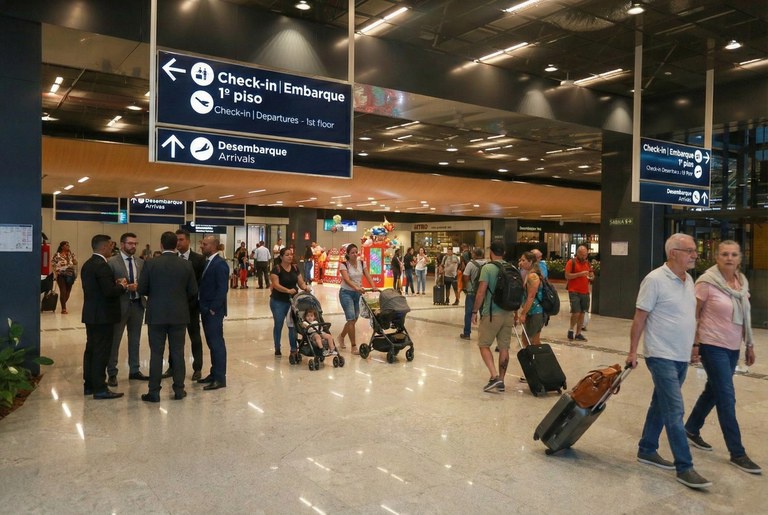
The South Region closed February 2026 with 7,818,046 passengers in the domestic market, according to data consolidated by ANAC and released by the Ministry of Ports and Airports on April 2. The data confirms a movement that goes beyond summer seasonality: the region is gaining operational density and expanding its role in the national business, tourism and logistics network.
Porto Alegre led the domestic movement, with 535,412 passengers, followed by Curitiba (419,040) and Florianópolis (307,286). Foz do Iguaçu and Navegantes also appeared with relevant volume, reinforcing the decentralization of demand. Internationally, Florianópolis concentrated most of the analyzed flow, with more than 253 thousand passengers, opening an important sign of diversification of entry points into the country.
It's not just volume: it's a change in network design
The most relevant point for decision making is the quality of this growth. The South-Southeast axis remains strong, but direct international connections and the evolution of airports outside of large hubs reduce dependence on a single operational funnel. In practical terms, this increases the scope for designing schedules with less connection friction and less risk of lost productivity due to chain delays.
Another vector is cargo: the region handled 31,359,837 kg in domestic air transport in the period. This data is important because it signals an active economic environment and increases the pressure for patio, window and ground support efficiency. Where the load grows, the competition for infrastructure tends to become more intense, and this directly affects those who depend on executive operations with predictability.
Direct impact on those who depend on executive aviation
For corporate operators and fleet managers, the scenario combines opportunity and discipline. The opportunity lies in strengthening regional airports and increasing the reach of services. The discipline lies in planning missions in advance, especially in high-pressure corridors, to avoid hidden costs with waiting, repositioning and last-minute adjustments.
The investment portfolio announced for the region is also important, with around R$389.4 million in works and operational improvements. This cycle tends to raise standards of safety, regularity and capacity, but the real gain appears for those who translate work into strategy: correct base, correct route and correct alternative for each mission profile.
In short, the South enters 2026 less as a complementary market and more as a relevant operational platform on the Brazilian corporate map. Those who adjust planning now tend to capture more efficiency and more reliability in the second half of the year.
Mais notícias
Uma seleção editorial para aprofundar tendências, certificações, defesa aérea e movimentações do mercado executivo.
Aeronaves citadas
Modelos mencionados nesta matéria para aprofundar comparações de cabine, autonomia e posicionamento no mercado.