Céu Executivo Notícias
Barra do Corda receives R$ 53.5 million in works and gains a strategic role in regional aviation in MA
Project financed by Fnac foresees a 1,450-meter runway, apron for commercial aircraft and a new passenger terminal, connecting airport infrastructure and regional development.
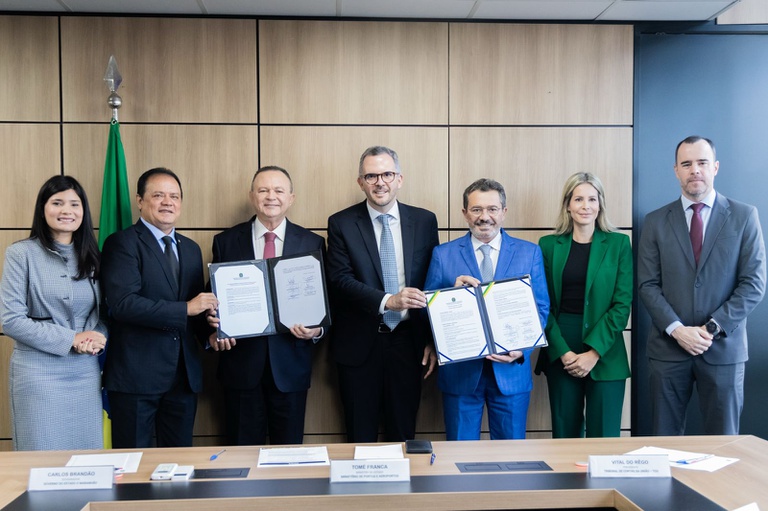

On April 1, 2026, the Ministry of Ports and Airports signed a term of commitment to invest R$53.5 million in Barra do Corda Airport (MA) and authorized the bidding for the works. The project is fully financed by the Union, via the National Civil Aviation Fund (Fnac), with execution in two stages and focused on expanding operational capacity in the central region of the state.
Of the announced total, R$ 32 million will be allocated to the first phase, focused on field infrastructure: 1,450-meter landing and take-off runway, runway strip and safety areas (RESA), taxiway, apron for commercial aircraft, in addition to night signaling and beacon systems. The second phase, worth R$ 21.5 million, includes a new passenger terminal, furniture and equipment.
What the project delivers in practice
In addition to the main work, the package includes operational reliability items that make a difference in everyday life: PAPI at both ends, illuminated windsock, rotating beacon, drainage, operational fencing and support structures. In real-world operation, this combination reduces usage restrictions, improves regularity, and increases predictability for business missions and regional services.
This type of investment tends to be underestimated when analyzed only from a municipal perspective. Barra do Corda is in the center of an area with strong agro-industrial activity and connections with more than 30 surrounding cities, which turns the airport into a support point for decision-making, field inspection and integration of production chains.
Why the topic matters in the executive context
For those operating business mobility in Brazil, the gain is not only in the new terminal, but in the reduction of logistical friction in regions where access time weighs more than route comfort. When a regional airport evolves into critical infrastructure, the corporate agenda gains speed of response and reduces dependence on long land journeys to large capitals.
There is also an institutional signal: the project reinforces the federal regional aviation strategy with a stamped resource and execution schedule. In an investment environment, this predictability counts because it reduces the risk of downtime and improves the planning capacity of operators and local partners.
If the schedule is met, Barra do Corda tends to move from limited infrastructure to becoming a functional connectivity asset in the interior of Maranhão. For business decisions, this is the difference between reacting to a bottleneck and operating with a real access alternative.
Mais notícias
Uma seleção editorial para aprofundar tendências, certificações, defesa aérea e movimentações do mercado executivo.